• Skip to primary navigation
  • Skip to main content
  • Skip to primary sidebar
  • Skip to footer
Montessori Mantra Teachers’ Training College

Montessori Mantra Teachers’ Training College

Hands-on and authentic instruction for Montessori educators

  • Assistants’ Course
  • Diploma Course
  • Professional Development
  • About Us
    • Our College
      • Our Philosophy & Values
      • Vision & Mission
    • Faculty & Administration
    • Our Facility
    • Why Choose Us
  • Career Center
    • Job Postings
    • Career Resources
  • Montessori Education
    • Maria Montessori
    • Montessori Philosophy
    • Montessori Method
    • Glossary & Terms
  • Updates
  • Contact Us

General

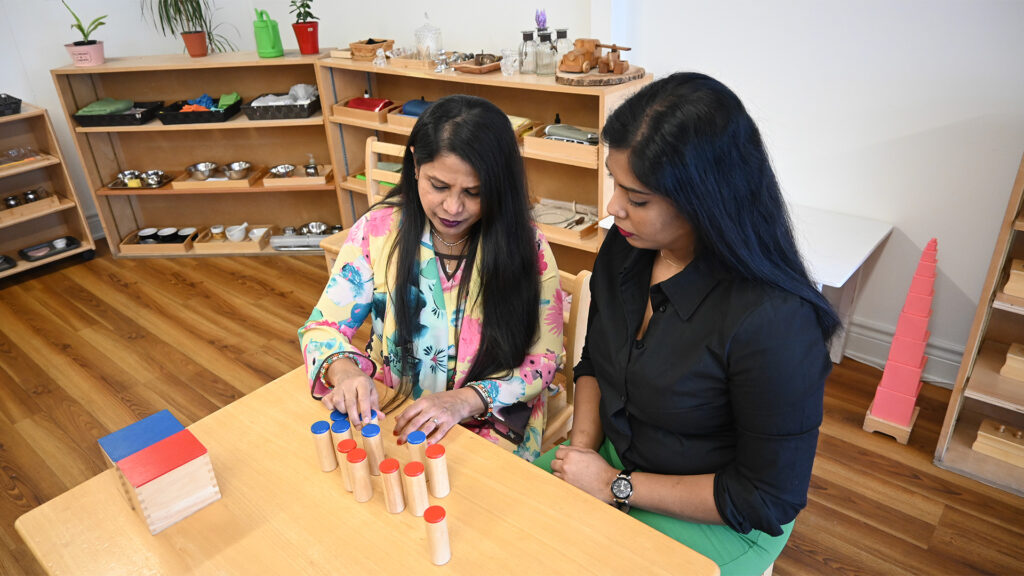
The Role of the Prepared Environment in Montessori Classrooms

September 9, 2026

If you walk into a well-run Montessori classroom, you’ll notice a quiet buzz of energy. Children are engaged in purposeful activity. Some are sitting quietly working on an activity while others set up their workspaces or return materials to the shelves.

How is it possible that so many young children concentrate? Although in the background, the classroom itself, also known as the prepared environment, plays a key role. Read on to learn what the prepared environment is and the benefits it offers.

What Is the Prepared Environment in Montessori?

In the Montessori philosophy, the prepared environment refers to the classroom environment. Dr. Maria Montessori created her educational method by observing what works best. She created different environments, offered a variety of activities, and watched how children responded. She noticed that children do well when they can help care for their classroom, make choices, and discover engaging work. 

Elements of the Prepared Environment

In a Montessori classroom, the prepared environment includes essential elements, many you can see, and others that you’ll only notice if you observe a classroom in action. This also means that you can set up your classroom beautifully, but there are also key elements of the classroom that the teachers create by setting expectations and boundaries.

Freedom of Movement and Choice

One of the most unique aspects of Montessori classrooms is that children are free to move around and choose activities. Instead of raising their hand to ask permission to go to the bathroom, sharpen a pencil, or get a drink of water, they can just do it.

Children are also free to choose learning activities from the shelves in the classroom. While the teacher may guide children to certain lessons, they ultimately have a choice. 

This freedom comes with limits. Children must follow basic expectations, such as respect for others and helping keep the classroom clean and organized, among others.

Learn more about how to cultivate a calm classroom here. 

Learning Materials

Dr. Montessori created materials, or hands-on activities, that children can use to learn. She created a variety of materials for each curriculum area. For example, the math materials include number rods, beads for counting and performing operations, the Stamp Game, and sandpaper numbers, among others. Children progress from learning about quantities and numbers to learning how to multiply, divide, and even perform algebra.

The learning materials must be in excellent condition, clean, complete, and ready to use. Each material is displayed on a tray, in a box, or in a basket. This way, children can move the material to their workspace.

Learn how to set up a Montessori classroom.

Beauty and Simplicity

Artwork, indoor plants, lamps, textiles, and more, all have a place in Montessori classrooms. Dr. Montessori believed that children are inspired by beauty, which is why she thought it was important for classrooms to be welcoming and attractive.

Montessori classrooms include beauty, but they’re not visually busy. Neutral walls and minimal decor helps protect children’s concentration. To avoid overwhelming the children, Montessori classrooms typically feature a few choice sculptures, photos, artwork, and plants. Simple, yet beautiful, is the style. 

Order

Dr. Montessori noticed that children crave order. For this reason, Montessori classrooms are very organized. Children help keep the classroom neat and clean throughout the day. From sweeping the floor to putting materials away correctly, children work together to maintain a neat and organized space.

The classroom is typically divided into sections of shelves. Each area holds the materials and activities related to one curriculum area. The language area may also include a reading corner with a cozy place to read and a bookshelf. Items on the shelves also have a specific order, and children must return each material to the exact spot they found it.

A Variety of Workspaces

In Montessori classrooms, children don’t sit at rows of desks. Instead, they can choose to work at a table or on the floor. When children work on the floor, they use a mat or carpet that helps define their work area and prevent other children from stepping on it. 

Working on the floor is not only fun and comfortable for children, it’s also practical. Children may work with some larger sets of blocks, rods, or materials that need more space than a table can provide. 

Mixed-Age Environment

Unlike traditional classrooms, where children are all within about a year in age, children in Montessori classrooms may be up to three years older or younger than their classmates. The mixed-age classroom helps the older children become leaders. The younger children are motivated by watching the older children learn exciting skills such as how to read. Plus, the younger children learn from the older children, who may sometimes help them with a lesson.

Why Is the Prepared Environment Important?

The prepared environment creates a wonderful space for self-directed learning. When executed well, the prepared environment offers many benefits to the children, such as:

Fosters Concentration

A classroom filled with engaging and interesting learning materials invites concentration. Because children can choose their work, they’re motivated and excited to complete lessons and activities. 

The simple, yet beautiful decor in the classroom also promotes concentration. Children aren’t overwhelmed by an overstimulating environment. Instead, they can work peacefully in a space that feels calm and organized.

Builds a Lifelong Love of Learning

When someone forces you to do something, you might feel resentful, annoyed, and unmotivated. However, in Montessori classrooms, children learn to pursue their academic interests of their own free will. Because children choose lessons, they also direct their own learning, a skill that serves them for life.

Teaches Decision-Making Skills

In life, every day is filled with choices. The freedom in Montessori classroom helps children learn to prioritize their time and make decisions about which materials to work with. 

Teaches Social Skills

The mixed-age classroom and freedom children are afforded creates many moments to practice social skills. Beyond saying, “excuse me” or “thank you,” children also learn to navigate challenging moments. For example, what if one child is using a material another child wants to use? Then, children need to learn to wait for a turn. 

The classroom environment also creates opportunities for practicing empathy. For example, if one student needs help tying their shoes, another may help. Or, if one student spills a material, others can help clean it up.

Fosters a Sense of Responsibility

Children learn to be a part of a community that works together to keep the classroom running. When children are expected to help clean and look after the classroom plants and/or pets, they build a sense of responsibility. 

Instead of assuming an adult will look after them or tell them what to do, they start to notice what needs to be done. For example, “Oh, I spilled some water. I’ll get a cloth and wipe it up.” These moments help children become contributing members of the community.

The Role of the Prepared Environment

In Montessori, the prepared environment is as important as a teacher. In fact, one of the teacher’s main tasks is to maintain the prepared environment and ensure it’s always meeting the children’s needs. The prepared environment, along with the teacher, helps children learn, grow, and reach their full potential.

Would you like to learn how to create and maintain a prepared environment that inspires concentration and learning? Many of the methods and strategies used in Montessori classrooms can be applied to any early childhood classroom.

At Montessori Mantra Teachers’ Training College, we offer various training programs. Sign up for our MACTE-accredited Montessori Early Childhood Diploma Course or register for our Montessori Assistants’ Course. Through our courses, you’ll build a strong understanding of the Montessori philosophy and learn how to apply it to real-world classroom settings.

Have questions? Get in touch, and we’ll be happy to answer your questions and guide you through the application process.
How Montessori Teachers Create Calm Classrooms 

August 4, 2026

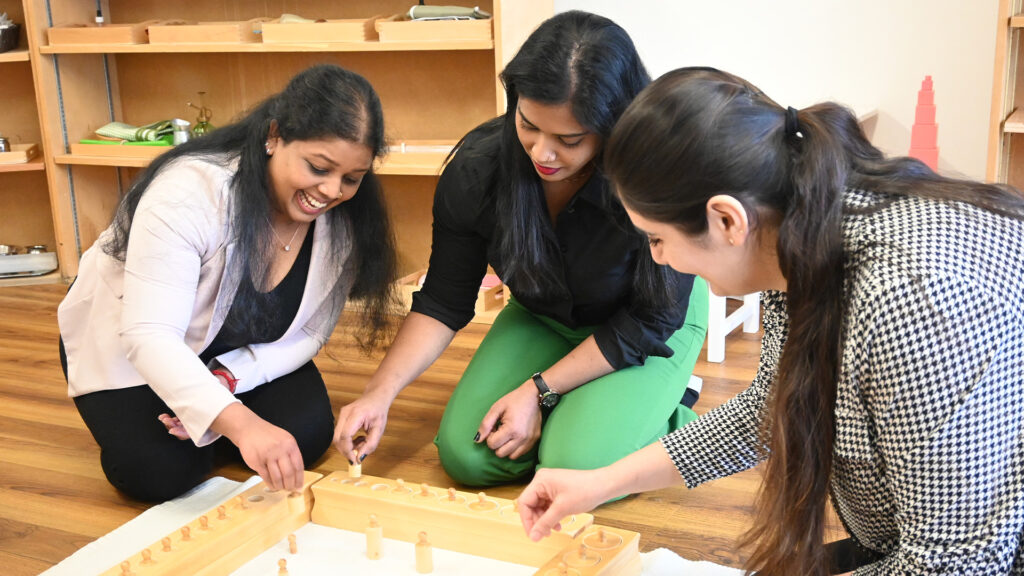
If you were a fly on the wall in a Montessori classroom, what would you see? You’d probably be surprised at how quiet and calm the classroom is, despite the fact that the students are three to six years old. 

One child sits at a table and methodically threads beads on a shoestring. Other children sit together reading a book. Another child carefully builds a tower using wooden blocks. Yet another child sweeps up a spill with a child-sized dustpan and brush.

You look around and finally find the teacher, sitting in a corner giving a lesson to a small group of students. She’s not at the front of the room, directing the children and making sure they keep quiet. Yet, the room is calm, happy, and productive. How does this work?

At Montessori Mantra Teachers’ Training College, we show teachers how to foster calm in their classrooms. In our Montessori training programs in Durham, future educators learn essential classroom management skills and strategies. Read on to discover how the Montessori method creates the conditions for calm, happy learning.

Montessori classroom management

What is Normalization in Montessori?

The classroom scene above describes children who are “normalized.” Dr. Montessori used this term to describe children’s behavior when they can choose meaningful work, concentrate, and respect other students, as well as the classroom.

In her own words, Dr. Montessori said, “…their excited fantasies and their restless movements disappear altogether; a calm, serene child, attached to reality, begins to work out his elevation through work. Normalization has been achieved.”

In other words, children who are normalized enjoy working. They don’t run around the classroom, interrupt others, or cause chaos. Instead, they voluntarily choose to concentrate on a variety of classroom projects and activities. 

Dr. Montessori believed that children are only restless or show poor behavior when their needs aren’t being met. That’s why in the Montessori method, teachers spend time observing children to understand their needs. They also use other strategies to help children become normalized.

The Montessori classroom helps children achieve normalization with a few key elements:

  • The Prepared Environment: The classroom must be filled with interesting and engaging activities that support the child’s development.  
  • Freedom: Children must be free to choose their activities.
  • Modeling: Montessori classrooms are mixed-age. So, the older children model how to behave and work to the younger children. This helps create a productive environment.
  • Guidance: Teachers provide lessons on basic skills like “How to interrupt politely,” “How to walk around a work mat,” and “How to ask for a turn.” These lessons prevent conflict and promote a harmonious classroom.

How Choice and Freedom Lead to Calm in Montessori Classrooms

One of the main differences between Montessori and traditional education is that in Montessori classrooms, children are allowed to choose their lessons and activities. In the classroom, there are shelves with trays and baskets. Each tray contains an activity or material. Children are free to choose any of the materials that they have already had a lesson on and know how to use.

It may seem counterintuitive, but having the freedom to choose activities and lessons fosters calm in the classroom. It’s similar to how you probably prefer to live your life. Imagine you have a list of chores you want to get done. What if you weren’t allowed to decide what order to complete your tasks? It probably wouldn’t feel too good to have someone dictate every part of your day for you. 

Instead, you probably think through your day and plan for yourself. For example, you might want to go to the grocery store early because there are fewer shoppers and less traffic. Or, you might feel more alert to manage banking and bills in the morning and prefer to do gardening in the evening. 

The same is true for children. When they choose their activities, they’re motivated and interested in working. This leads to a calm, productive classroom because children are busy and concentrating, making them less likely to get into trouble or interrupt other children.

Freedom within Limits

In the Montessori classroom, freedom doesn’t mean children can do anything they want at all. It simply means they can choose from the prepared activities within the classroom. Also, children must follow basic rules or norms. The main rule is to respect the classroom and others. This means caring for the classroom, the materials, and treating other students with care.

Classroom Management in Montessori Classrooms

Classroom management in Montessori classrooms also supports a calm environment. Here are a few strategies Montessori teachers use:

Preventing Behavior Problems the Montessori Way

In the Montessori method, teachers prevent classroom management issues before they even begin. One major aspect of this is the classroom itself, known as the “prepared environment.”

Dr. Montessori explained, “Naughtiness will disappear if we give children the right environment at a sufficiently early age. This environment must provide a great deal of mental food and warm, loving treatment.”

In other words, the classroom must be filled with engaging, exciting activities for children to enjoy. Children should come into the classroom excited to use the materials and enjoy the available activities. This means teachers are constantly observing the space and adding new activities that meet the children’s needs.

Learn more about how to set up a Montessori classroom here. 

Redirecting and Gluing: Montessori Discipline Techniques

What about children who are struggling to concentrate or who don’t follow the rules? Montessori teachers use different techniques to support children in these moments. 

Usually, the teacher redirects the child first. This means you remind the child what they should be doing. For example, “What would you like to work on now?” or “Would you like me to help you find some work?”

For children who need more support, the teacher might try gluing. To “glue,” the teacher keeps the child close to her for a short period. They might watch her give a lesson to another child or help her with another task. Sometimes, watching another child involved in work can help inspire them. Then, the teacher helps the child find some work to do.

Peace Education in the Montessori Classroom

In addition, the Montessori curriculum includes a peace education component. Through peace education, children learn skills like self-regulation, how to manage conflict, and how everything in the world is connected.

Many Montessori classrooms have a peace corner or area where children can go when they feel sad, upset, or angry. This offers children something productive to do with their emotions. They can take a moment to regulate by looking at images, practicing breathing, or just taking a moment. 

Learn to Create a Calm Classroom with Montessori Training in Ontario

Would you like to bring the calmness of Montessori to your classroom? Many of the methods and strategies used in Montessori classrooms can be applied to any early childhood classroom.

At Montessori Mantra Teachers’ Training College, we offer various training programs. Sign up for our MACTE-accredited Montessori Early Childhood Diploma Course or register for our Montessori Assistants’ Course. 

Our Montessori training programs are held in person and provide valuable hands-on experience. You’ll learn how to create a calm, productive classroom. Additionally, you’ll learn important classroom management strategies.

Explore our MACTE-accredited Early Childhood Diploma Course to learn more about this comprehensive training program. Have questions? Get in touch, and we’ll be happy to answer your questions and guide you through the application process.

Montessori Mantra Teachers’ Training College is MACTE Accredited

July 7, 2026

Montessori Mantra Teachers’ Training College is now MACTE-accredited! After a rigorous evaluation, the accreditation decision was announced on June 16, 2026, validating the excellence of the Montessori Mantra Teachers’ College diploma course. 

What exactly is MACTE, and why should you choose a MACTE-accredited Montessori teacher training program? Read on to learn what MACTE is, what to look for in a Montessori teacher training program, and what sets Montessori Mantra’s diploma course apart from other Montessori training options in Ontario.

MACTE Accreditation for Montessori Mantra Teachers’ Training College in Ontario

As a MACTE-accredited adult learner program, we went through a rigorous accreditation process that evaluated our training methods and curriculum. The nearly year-long accreditation process includes on-site visits, input from third parties, and board deliberations. This comprehensive process certifies that accredited programs, like ours, offer quality education and training for Montessori teachers. 

Graduating from a MACTE-accredited program ensures your credential is widely recognized by potential employers, resulting in stronger career opportunities. Plus, you can feel confident that your training program meets a standard of excellence that will prepare you for success.

What is MACTE Accreditation?

MACTE (Montessori Accreditation Council for Teacher Education) is an internationally recognized organization that ensures Montessori training programs meet high standards to prepare competent and effective educators. MACTE sets standards to guarantee the authenticity of Montessori training programs and verify that faculty hold the proper credentials. The robust accreditation process ensures certified training programs can support your needs as a learner and that the curriculum meets international standards.

Founded in 1995, MACTE is recognized by the United States Department of Education as a reliable authority and evaluator of Montessori teacher education programs. In Canada and the United States, MACTE is the most widely recognized accreditation body for colleges and training programs providing diplomas and certificates to professional Montessori educators.

Why Choose a MACTE Certified Training Program in Pickering, ON?

Selecting a Montessori teacher training program in Ontario requires careful consideration. Because the term “Montessori” is not trademarked, anyone can use the name. This can make it difficult to know if the program you sign up for is authentic, effective, and worth your investment. 

Opting for a MACTE certified Montessori training program assures the curriculum, faculty, and methodology meet fundamental ideals and standards. 

Better Employment Opportunities

Montessori schools looking to hire teachers and administrators seek educators who hold diplomas from MACTE certified training programs. This helps schools ensure their teachers and guides all possess the necessary knowledge and skills to lead an authentic Montessori classroom. 

Plus, MACTE is recognized throughout Canada and the United States, meaning your program will be widely respected and accepted by potential employers. 

Quality Program Assurance

Choosing a MACTE accredited Montessori teacher training program also assures a level of quality. While some unaccredited programs might be great, there’s no guarantee. The MACTE accreditation process checks into the program’s curriculum, methodology, and faculty experience. This offers additional assurances related to the program’s quality.

Authentic Teaching of the Montessori Method

Over the years, the Montessori method has grown in popularity. With this popularity also comes misinformation and misunderstanding how the method works. A truly authentic Montessori training program remains faithful to Dr. Montessori’s philosophy, methodology, and curriculum. 

MACTE accredited training programs must remain authentic to Dr. Montessori’s ideas. This means the faculty have experience as Montessori teachers and have also taken the time to study Dr. Montessori’s original writings and teachings. 

Choosing a MACTE Certified Montessori Training Program Is Just the Start

Selecting a MACTE-accredited Montessori training program is an excellent start. Beyond MACTE accreditation, what else should you look for in a Montessori teacher training in Ontario? 

  • Modality: You can choose between online, in-person, and hybrid programs. As you choose, keep in mind that teaching is a hands-on profession. Choosing a program that offers in-person learning can support your skill development through hands-on practice and experiences.
  • Class Size: When evaluating programs, be sure to ask about class size. Smaller class sizes usually mean more personalized attention and the chance to ask questions.
  • Internship: Does the program provide an internship? An internship provides valuable experience and the chance to see a real, working Montessori classroom. 
  • Practice: No matter which modality you choose, programs vary in how much hands-on practice with Montessori learning materials they offer. This hands-on practice is key to becoming an effective Montessori educator.
  • Length: Some programs are more intensive and can be completed in a matter of months. Others may require a year or more of study. Before choosing a program,  consider class time commitments and recommended self-study, as well as the program schedule.

These, among other factors, will help you make your final decision. 

How Is MMTTC’s Early Childhood Diploma Different?

Montessori Mantra Teachers’ Training College Early Childhood Diploma is unique in several important areas that provide graduates with clear advantages:

  • In-person. We offer in-person programs with hands-on training and experiences. While online classes are convenient, they can’t replicate the hands-on practice with learning materials. In-person training also offers the opportunity for role-playing and practicing classroom management. 

Learn more about the difference between in-person and online Montessori teacher training in Ontario.

  • Expertise. Our diploma course includes personalized support from experienced Montessori experts. Founder, Nandita Agarwala, has been a Montessori educator since 1987. 
  • Small Class Sizes. We believe in keeping groups small to form a supportive learning community and space for each student to participate. 
  • An Understanding of Learning Differences. Our diploma course includes a learning difference component that focuses on working with children with special needs. “Given the number of special needs children today, we believe this component is essential to prepare Montessori educators to help each child succeed and reach their full potential,” Nandita Agarwala says. 
  • A Robust Internship. We provide placement, support, and supervision for a 500 hour internship. This internship experience goes beyond observation and initial experiences. It helps educators truly begin to put their learning into practice in a supportive space that sets a foundation for confidence and future success leading a Montessori classroom.

When you choose MMTTC, you can count on a holistic, in-depth exploration of Montessori pedagogy. 

What MMTTC Graduates Say

Recent graduate, Farah Popal, shared her experience in the Montessori Early Childhood Diploma Course:

“I had a wonderful experience attending Montessori Mantra Teachers’ Training College. The instructors were knowledgeable, supportive, and always encouraged us to develop our teaching skills with confidence. The program provided a good balance of theoretical knowledge and practical experience, helping me gain a deeper understanding of child development and effective teaching methods.

The learning environment was welcoming and professional, and I had many opportunities to grow both personally and professionally. Thanks to the guidance and training I received at Montessori Mantra Teacher’s Training College, I feel well-prepared for my career in education. I highly recommend this college to anyone interested in pursuing a teaching profession.”

MMTTC Is the Clear Choice for MACTE Accredited Montessori Teacher Training in Ontario

Montessori Mantra Teachers’ Training College offers excellence in Montessori teacher training for educators, parents, and caregivers interested in learning to understand and apply the Montessori philosophy. Our recently approved MACTE accreditation corroborates our diploma program’s excellence and authenticity. 

Explore our MACTE-accredited Early Childhood Diploma Course to learn more about this comprehensive training program. Have questions? Get in touch, and we’ll be happy to answer your questions and guide you through the application process.

Top Skills You Learn in Montessori Teacher Training in Pickering, Ontario

June 6, 2026

How is Montessori teacher training unique from traditional teacher training? Some people compare Montessori teachers to waiters. Like waiters, Montessori teachers observe their students from across the room, only checking in when necessary. Similar to waiters who suggest menu items they think diners would enjoy, Montessori teachers offer lessons they think the child will enjoy. Montessori teacher training helps future teachers build the necessary skills to be an excellent “waiter,” supporting each child’s academic journey while also enjoying the learning process.

During Montessori teacher training, you’ll discover the Montessori philosophy, classroom management skills, Montessori materials, and more. If you’re interested in starting your Montessori journey, here’s a closer look at some of the skills you’ll gain.

Skills Learned in Montessori Teacher Training in Pickering, Ontario

In a Montessori classroom with trained teachers, children work happily, learning to read, performing math operations, and even cleaning the classroom. If you popped your head in, you might not even be able to tell where the teacher is! She might be sitting on the floor, giving a lesson to one student. Or, she might be sitting in a chair in the corner, observing the children as they work. 

This is a special feature of Montessori classrooms. Dr. Montessori once wrote, “The greatest sign of success for a teacher… is to be able to say, ‘The children are now working as if I did not exist.'” It may sound like an unreasonable reality that children would work without an adult telling them what to do. 

How do Montessori teachers make this happen? Every Montessori teacher has a unique skill set that they develop through training, practice, and experience. Here’s an overview of the skills you’ll learn when you begin Montessori teacher training.

How to Put Montessori Values into Practice

One of the main goals of Montessori teacher training is to give future teachers a deep understanding of the Montessori philosophy and values. These values include:

  • Respect for the child
  • Supporting the child’s independence
  • The absorbent mind
  • The prepared environment
  • Hands-on learning
  • Supporting intrinsic motivation
  • Holistic education, including social and emotional development

During training, you’ll learn about the Montessori principles and how to put them into practice. The philosophy is the underpinning of everything Montessori teachers do. That’s why most training programs emphasize the core principles and methodology of Montessori education. 

How to Use Montessori Materials

Learning to use Montessori materials is an essential part of Montessori teacher training in Pickering, ON. In Montessori classrooms, children work with hands-on materials like the dressing frames or sandpaper letters. Working with materials is integral to Montessori. While working with materials, children develop independence, learn through the five senses, and achieve mastery through child-directed learning.

However, for children to gain all the benefits of Montessori materials, teachers need to present and demonstrate their proper use. Plus, teachers need to learn when to present each material and what to do after the child masters every concept. You’ll learn all these details, and more, in Montessori teacher training. 

How to Create a Beautiful Montessori Classroom

When you walk into a Montessori classroom, you’ll find a space that’s calm, relaxing, beautiful, and engaging all at the same time. You’ll also likely find a cozy reading corner, a vase of flowers, and even a few plants. Amongst shelves lined with interesting materials, you’ll also find carpets, spaces for movement, and artwork. Every Montessori classroom is unique because it reflects the needs of the students. 

As a part of your training, you’ll learn the best practices for setting up a Montessori classroom.

Montessori Classroom Management Skills

Classroom management skills are what make it possible for Montessori classrooms to become productive spaces where children work, explore, and learn. The ultimate goal, as Dr. Montessori said, is for children to work as if no teacher were present at all. 

It may sound counterintuitive that children would work with no teacher present, but with effective classroom management, children become what Dr. Montessori called “normalized.” In other words, children become well-adjusted members of the classroom community who work, help others, and keep the classroom neat and clean.

It takes children time to become adjusted to the Montessori classroom. This is where classroom management skills are especially important. In the Montessori classroom, teachers use techniques such as redirection, modeling, and gluing. 

However, Montessori classroom management also involves many preventative strategies. Dr. Montessori once wrote, “The child who concentrates is immensely happy.” When children are happy and concentrating, they are less likely to behave in ways that are disruptive or challenging in the classroom. This means teachers monitor the classroom to ensure there are always enough interesting, engaging activities available to children. 

How to Offer a Calm Presence in the Classroom

As a child, did you ever have a teacher who walked into the classroom and transmitted instant calm? The classroom would get quiet, and everyone would wait for the teacher to address the class.

During Montessori teacher training, you will learn how to offer a calm presence in the classroom. The goal isn’t to scare children into being quiet, but to bring a spirit of calm and respect. The teacher’s energy can quickly rub off on the children, so cultivating a calming presence is important.

Observation Skills

In the Montessori classroom, observation skills are essential. Through observation, you can gain many insights into the children in your care. 

For example, you can learn about each child’s interests and needs. You can also discover their strengths, skills, and the best lesson to offer them next. 

As a part of Montessori teacher training, you’ll learn not only what to look for but also how to track your observations. Each school may track differently, but you’ll get a sense of how these systems work and what you should track.

Additionally, you’ll learn to use observation to make adjustments to the classroom. For example, if you notice children ignoring one area of the classroom, why might that be? During training, you’ll gain insights into whole-classroom observations and how to make useful, effective changes. 

When to Step In and When to Observe

One of the key skills Montessori teachers must learn is when to intervene. When teachers interrupt children unnecessarily, they may disturb the child’s concentration. Additionally, interruptions can make it difficult for the child to develop intrinsic motivation. Instead of working for the joy of it, they’ll constantly look to the teacher for approval.

Dr. Montessori explained, “Praise, help, or even a look, may be enough to interrupt him, or destroy the activity…The great principle which brings success to the teacher is this: as soon as concentration has begun, act as if the child does not exist. Naturally, one can see what he is doing with a quick glance, but without his being aware of it.”

That said, there are also moments when it is important to intervene. For example, if a child is disturbing others or is in danger, there are appropriate ways to intervene. Through Montessori teacher training, you’ll learn to identify how and when to step in. 

Montessori Teacher Training in Pickering, ON with Montessori Mantra Teacher’s Training College

At Montessori Mantra Teachers’ Training College, you’ll learn all of the above and more! We offer a variety of Montessori courses appropriate for teachers, caregivers, and those interested in a career change. 

All our programs are in person, providing invaluable hands-on experiences that will help you build your skills. Our Certified Montessori Educator Diploma course is a comprehensive 9-month program that also includes a supervised 500-hour practicum. This ensures you can see and participate in a working Montessori classroom. Our graduates can step into a new role as a Montessori teacher with confidence in their knowledge and skills.
Get in touch to learn more about our programs and which is the best fit for you!

Online vs In-Person Montessori Training in Pickering, Ontario

May 22, 2026

Increasingly, people choosing to further their education prefer online programs to in-person training. Advancing technology has made it easy and convenient for learners and colleges alike. But is online learning the right choice for Montessori teacher training? 

Both online and in-person learning offer unique advantages and drawbacks to consider. If you’re interested in starting your Montessori training journey, here’s what you should know before making your decision.

An Overview of Montessori Teacher Training

Montessori teacher training aims to help educators, parents, and caregivers understand and implement the Montessori method. 

The Montessori method is a unique, child-centered approach to education developed by Dr. Maria Montessori. An Italian doctor, Dr. Montessori, became an educator after working with children in the early 1900s. Inspired by the children and their potential, she created a revolutionary educational method that remains popular today. 

Montessori teacher training covers many areas relevant to teaching and caring for children, such as:

  • The Montessori philosophy and method
  • The Montessori curriculum
  • Montessori classroom management
  • How to guide children and meet their needs in the classroom
  • Using and presenting Montessori materials

The ultimate goal is for graduates to feel confident leading a classroom of children while effectively using the Montessori method. 

In the Montessori method, children are grouped in mixed-age classrooms, which offers many benefits. This means training typically covers a specific age grouping, such as:

  • Infants (From birth to age 2 or 3)
  • Preschoolers and kindergartners (ages 2.5 to 6)
  • Lower elementary (ages 6-9)
  • Upper elementary (ages 9-12)

At Montessori Mantra Teacher’s Training College, we offer training focused on early childhood education, specifically for children aged 2.5 to 6 years old.

Advantages of In-Person Montessori Training in Pickering, Ontario

In-person education brings some unique benefits, no matter what the area of study. The interactions and connections created in person can’t be matched. However, Montessori training is uniquely adapted to the in-person format. Why?

The Montessori method relies heavily on physical materials and the teacher’s role in cultivating a peaceful classroom. Developing skills in these areas is easiest in an in-person environment. Here are a few examples of how this works:

Learning Materials

In the Montessori classroom, children work with learning materials to learn different concepts. Dr. Montessori believed that concrete materials help children understand complex concepts in math, language, science, and more. 

For example, children may work with the Short Bead Stair to learn the numbers from 1 to 9. Another famous Montessori material is the Pink Tower. This set of ten pink cubes teaches quantities, size, and proportion. 

Teachers need to learn how to use each material and how to present it correctly to children. This is much easier to do in person than online. Most importantly, in-person Montessori programs typically provide access to high-quality Montessori materials. This means you can touch the materials, move them, get tips from the instructor, and pick up on body language or facial cues. 

In-person practice with Montessori learning materials can help build your confidence and skills. As a result, you’ll have an easier transition to working in a Montessori classroom after completing your training. 

Role-modeling and Guidance

During in-person training, you can get invaluable feedback, tips, and mentorship from your instructors. For example, during training, you’ll practice leading lessons, conducting a circle, or managing the classroom. Your instructor can give you real-time feedback and tips that will improve your skills.

Another advantage of in-person programs is the opportunity to complete a practicum or internship. The value of observing a working classroom and practicing teacher skills is unmatched. 

Practice Makes Perfect

In her writings, Dr. Montessori highlighted the importance of practice. Following the Montessori philosophy can be challenging, especially when you’re just getting started. It requires a lot of patience and practice to learn to respect the child’s concentration, know when to intervene, and how to cultivate a peaceful classroom. 

As she explained in her own words, “The teacher’s skill in not interfering comes with practice, like everything else, but it never comes easily. It means rising to spiritual heights. True spirituality realises that even to help can be a source of pride.”

In-person training ensures you get the chance to practice these essential skills in a safe and supportive environment.

Disadvantages of In-Person Montessori Training in Pickering, Ontario

Despite the many advantages an in-person Montessori training program offers, there are also some drawbacks. Some of the main disadvantages include:

Time Commitment

An in-person program typically requires a greater time commitment than an online program. You may need to commute to the class location. Also, if you’re a parent, attending class means you may need to coordinate childcare.

Less Flexibility

In-person training typically offers less flexibility related to class times and schedules. Online programs are often more accommodating. You may be able to complete asynchronous coursework whenever it’s convenient for you. 

That said, many in-person Montessori programs also offer evening or weekend classes, making it possible to fit a course into your busy schedule. 

Advantages of Online Montessori Training

An online Montessori course offers many benefits, especially for people with more restrictive schedules or circumstances. Some of the main advantages include:

Saves Time

Taking an online course can often save you the time you would need to spend commuting. All you need to do is log on to your meeting or course and get started.

Flexibility

In addition to being able to complete lessons when convenient, online courses can also be flexible in pacing. You can often work through lessons whenever you’d like, working more quickly when you have more time and slowing down when you need a break. 

Disadvantages of Online Montessori Training

What are the drawbacks of online learning for Montessori training? Many topics, including the Montessori philosophy and theory, adapt well to the online format. However, teaching is a hands-on profession. In-person experiences, practice, interactions, observation, and instructor support provide a foundation that’s hard to match online.

Not All Concepts Adapt Well Online 

Some specific areas of Montessori training that are more effective in person include:

  • Learning how to use and present Montessori learning materials
  • Practicing teaching and classroom management skills
  • Observing a live classroom
  • Getting feedback from instructors 

Chart: Online vs. In-Person Montessori Training

To help you weigh the advantages and disadvantages, consider this chart comparing online and in-person Montessori teacher training. 

In-Person Montessori TrainingOnline Montessori Training
AdvantagesLearning materials
Role modeling and guidance
Opportunity to practice
Saves time
Flexibility
DisadvantagesTime commitment is often greater
Less flexibility
Not all concepts adapt well to online learning (learning materials, guidance during practice, and classroom observation)

Choosing Between an Online and In-Person Montessori Training

As you consider Montessori teacher training, the right format ultimately depends on your situation and priorities. For those who need greater flexibility, an online program may be the best choice. However, if you’re looking for opportunities to practice and gain valuable experience as a Montessori teacher in addition to mastering theory, an in-person program is a better option.

Keep in mind that even more important than the format is the quality of the training. When evaluating programs, seek out schools led by an expert with experience in the Montessori method. Instructors with experience and a strong Montessori background will provide wisdom, strategies, and tips that make all the difference in your training. 

In-Person Montessori Training in Pickering, Ontario

Montessori Mantra Teacher’s Training College offers in-person Montessori training in Pickering, Ontario. Discover our comprehensive Montessori Diploma Course, Assistant’s Course, and Professional Development Workshops.

Each of our courses and workshops brings the expertise of our founder, Nandita Agarwala, who has been a Montessori educator since 1987.

Get in touch to learn more about our programs and which one is the best fit for you! 

Watch the Replay: “Your Future in Montessori Education Starts Here”

August 5, 2025

If you missed our recent live webinar, we’ve got you covered. In this 30-minute session, Founder Nandita Agarwala and Registrar Debbie Couture share everything you need to know about our Montessori Early Childhood Diploma Program, from hands-on training and practicum experience to why Montessori is a powerful, values-based approach to education.

Whether you’re a newcomer to Canada, a career changer, or an aspiring educator, this webinar will help you understand if this path is right for you.

Watch the full recording below and take the first step toward a meaningful career in Montessori education.

Learn More About The Montessori EC Teacher Diploma Program
  • Page 1
  • Page 2
  • Page 3
  • Interim pages omitted …
  • Page 7
  • Go to Next Page »

Primary Sidebar


Get Started Today

Montessori Early Childhood Diploma Course (MACTE accredited) 

Whether you’re exploring Montessori for the first time or ready to enroll, we’re here to help.

Learn More
Enrolling for January 2027

Recent Posts

  • The Role of the Prepared Environment in Montessori Classrooms
  • How Montessori Teachers Create Calm Classrooms 
  • Montessori Mantra Teachers’ Training College is MACTE Accredited
  • Top Skills You Learn in Montessori Teacher Training in Pickering, Ontario
  • Online vs In-Person Montessori Training in Pickering, Ontario
  • Instagram
  • LinkedIn
  • Facebook

Footer

  • Assistants’ Course
  • Diploma Course
  • Professional Development
  • About Us
    • Our College
      • Our Philosophy & Values
      • Vision & Mission
    • Faculty & Administration
    • Our Facility
    • Why Choose Us
  • Career Center
    • Job Postings
    • Career Resources
  • Montessori Education
    • Maria Montessori
    • Montessori Philosophy
    • Montessori Method
    • Glossary & Terms
  • Updates
  • Contact Us
  • Privacy Policy
  • Health & Safety
  • Instagram
  • LinkedIn
  • Facebook

Montessori Mantra Teachers’ Training College holds accredited status for its Early Childhood Diploma Course from the Montessori Accreditation Council for Teacher Education (MACTE).
Copyright © 2026 Montessori Mantra Teachers' Training College. All Rights Reserved.
Sexual Violence Policy