• Skip to primary navigation
  • Skip to main content
  • Skip to primary sidebar
  • Skip to footer
Montessori Mantra Teachers’ Training College

Montessori Mantra Teachers’ Training College

Hands-on and authentic instruction for Montessori educators

  • Assistants’ Course
  • Diploma Course
  • Professional Development
  • About Us
    • Our College
      • Our Philosophy & Values
      • Vision & Mission
    • Faculty & Administration
    • Our Facility
    • Why Choose Us
  • Career Center
    • Job Postings
    • Career Resources
  • Montessori Education
    • Maria Montessori
    • Montessori Philosophy
    • Montessori Method
    • Glossary & Terms
  • Updates
  • Contact Us

General

Montessori Education: Core Values and Beliefs

December 6, 2024

Montessori education is built on core values emphasizing independence, respect, and holistic development. These principles guide Montessori’s unique approach to fostering well-rounded learners equipped for success in life.

1. Independence and Freedom

Children are encouraged to make choices and control their learning, fostering self-confidence and decision-making skills. Montessori classrooms allow children to explore within structured guidelines, allowing them to develop autonomy.

2. Respect for the Child

Each child is viewed as a unique individual. Respecting the child’s pace, interests, and abilities is central to the Montessori philosophy. This respect nurtures self-esteem and promotes positive emotional and social growth.

3. Hands-On Learning

Learning through doing is a key belief in Montessori education. Children can physically interact with concepts using sensory-rich materials, making learning more engaging and effective.

4. Holistic Development

Montessori education addresses academic growth and emotional, social, and physical development. This whole-child approach prepares students for both personal and academic success.

The core values of Montessori education—independence, respect, hands-on learning, and holistic development—create an environment where children thrive as confident, capable learners. Montessori’s focus on nurturing the whole child is a powerful educational philosophy.

How to Build a Successful Career in Montessori Education

December 5, 2024

Montessori education is a growing field that offers rewarding career opportunities for those passionate about nurturing young minds. Whether you’re just starting or looking to transition into this unique teaching methodology, building a successful career in Montessori education begins with the right training, hands-on experience, and a commitment to continuous learning. Here’s how to establish yourself as a confident and capable Montessori educator.

1. Understand the Montessori Philosophy

Montessori education is more than a teaching method—it’s a philosophy that emphasizes independence, self-directed learning, and respect for the child’s natural development. To succeed in this field, it is essential to embrace these principles and understand how they are applied in Montessori classrooms.

Tip: Read foundational Montessori texts, such as The Absorbent Mind by Dr. Maria Montessori, to deepen your understanding.

2. Choose the Right Training Program

Your training is the foundation of your career. It is crucial to enroll in a comprehensive program that combines theoretical knowledge with hands-on practicum.

Why MMTTC?

Montessori Mantra Teachers’ Training College (MMTTC) in Toronto and the Greater Toronto Area is the leading institution for Montessori Early Childhood Diploma courses. Here’s why MMTTC is the top choice:

  • Hands-On Experience: 500 hours of practicum in Montessori classrooms provide real-world teaching skills.
  • Flexible Schedules: Part-time classes on evenings and weekends make it easy for adult learners to pursue their passion.
  • Expert Faculty: Learn from seasoned Montessori educators who guide you every step of the way.
  • Comprehensive Curriculum: Dive deep into Montessori philosophy and methodologies tailored for children aged 2.5 to 6 years.
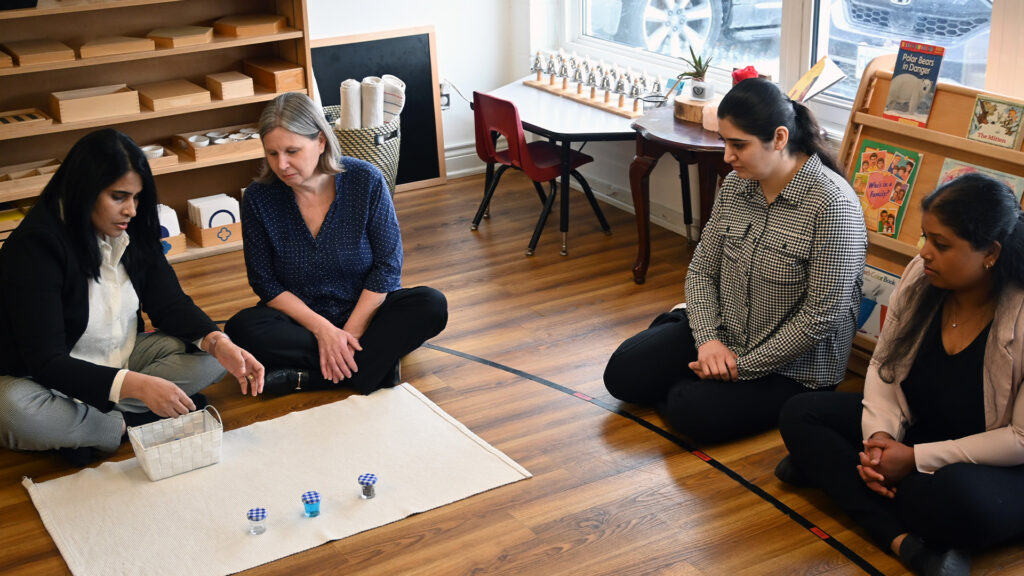
  • In-Class Instruction: MMTTC emphasizes immersive learning by offering in-person training inside real Montessori classrooms.

3. Gain Hands-On Classroom Experience

Montessori education relies heavily on experiential learning, both for the students and the educators. Practical experience in a Montessori classroom is invaluable for mastering classroom management and effectively using Montessori materials.

At MMTTC, Students gain 500 hours of hands-on practicum in Montessori classrooms, ensuring they’re job-ready upon graduation.

4. Build a Strong Professional Network

Networking with other Montessori professionals, attending workshops, and joining associations like the Canadian Association of Montessori Teachers (CAMT) can help you stay connected and informed about opportunities in the field.

5. Stay Committed to Lifelong Learning

The Montessori method evolves with new research in child development. To remain effective, educators should pursue ongoing professional development through seminars, advanced training, or additional certifications.

Building a successful career in Montessori education starts with a strong foundation, hands-on experience, and a passion for fostering growth in children. Montessori Mantra Teachers’ Training College (MMTTC) offers the perfect starting point, providing you with the skills, knowledge, and experience needed to excel in this rewarding field.

Learn More About Our Training Programs

Discover the Unique Benefits of Montessori Learning

December 4, 2024

Montessori education offers a child-centered approach that nurtures independence, creativity, and a lifelong love for learning. Rooted in self-directed activity and hands-on learning, Montessori environments encourage exploration and foster holistic development.

Encourages Independence

Montessori classrooms are designed to allow children to choose their activities and work at their own pace. This promotes independence, helping children build confidence as they make decisions and solve problems on their own.

Hands-On Learning

In Montessori schools, children engage with specially designed materials that make abstract concepts, like math or language, more tangible. This hands-on approach enhances understanding and retention by allowing students to learn through experience.

Focuses on the Whole Child

Montessori education goes beyond academics. It nurtures emotional, social, and physical development, fostering well-rounded growth. Children are encouraged to collaborate, share, and respect others, developing strong interpersonal skills.

Tailored to Individual Needs

Every child learns differently, and Montessori education embraces this by offering personalized learning experiences. Teachers observe and guide students, providing the right level of challenge based on each child’s progress.

Montessori learning is designed to inspire independent thinking, creativity, and a passion for discovery. By focusing on the whole child and adapting to individual needs, Montessori education lays a strong foundation for lifelong success.

Why Montessori Mantra Teachers’ Training College (MMTTC) is the Top Choice for Montessori Early Childhood Diploma in Toronto and the GTA

December 2, 2024

Montessori Mantra Teachers’ Training College (MMTTC) has established itself as the leading institution for Montessori Early Childhood Diploma training in Toronto and the Greater Toronto Area (GTA). Offering a blend of theory, practice, and flexibility, MMTTC equips aspiring Montessori educators with the skills they need to inspire and shape young minds. Here’s why MMTTC stands out:

1. Hands-On In Class Training With Practicum

MMTTC emphasizes immersive learning by offering 500 practicum hours in certified Montessori classrooms. Trainees experience real-world teaching scenarios, gaining the confidence and expertise required to succeed in early childhood education.

2. Flexible Learning Schedule

Understanding the needs of adult learners, MMTTC offers part-time classes on Wednesday evenings and Saturdays. This flexibility allows students to balance their education with personal and professional commitments seamlessly.

3. Personalized Attention

With small cohort sizes, MMTTC fosters a collaborative and supportive learning environment. This personalized attention ensures that every student feels valued and well-prepared for their teaching journey.

4. Comprehensive Curriculum

The program covers every aspect of Montessori philosophy and methodology, ensuring students are fully prepared to implement Montessori principles effectively. From child development to Montessori materials, the curriculum provides a robust foundation.

5. Experienced Faculty

Learn from seasoned Montessori educators who bring years of classroom experience and a passion for teaching. MMTTC’s faculty is dedicated to mentoring and guiding students every step of the way.

MMTTC’s commitment to excellence in Montessori education has made it the top choice for Montessori Early Childhood Diploma training in Toronto and the GTA. With a flexible schedule, experienced faculty, and an emphasis on hands-on in class learning, MMTTC prepares graduates to inspire and nurture the next generation of young learners.

Take the first step toward your Montessori teaching career with MMTTC, where passion meets excellence in education.

Learn More About Our Training Programs

How Montessori Education is Making a Difference Worldwide

November 14, 2024

Montessori education has grown far beyond its origins in Italy, with schools in over 140 countries embracing its unique approach to learning. From small rural communities to bustling urban centers, Montessori education is making a significant impact on children’s development across the globe. Its child-centered philosophy and emphasis on independence, exploration, and respect for the individual have helped reshape education in countless ways. Here’s how Montessori education is making a difference worldwide.

Promoting Global Citizenship

One of the key principles of Montessori education is fostering respect for others and the world around us. In Montessori classrooms, children are exposed to lessons that cultivate global awareness and empathy. Montessori’s cultural studies curriculum introduces children to different countries, traditions, and languages, helping them understand and appreciate diversity. This early exposure to global perspectives helps children become more compassionate, open-minded individuals who are prepared to be thoughtful global citizens.

Supporting Education in Developing Nations

Montessori education has been adopted in many developing countries as a powerful tool for improving educational outcomes. Its hands-on, child-centered approach is particularly effective in resource-limited settings, where traditional methods may not be as accessible. Montessori schools in countries like India, Tanzania, Kenya, and Nepal have empowered children from underserved communities by providing them with high-quality, interactive education that builds critical thinking and problem-solving skills.

Empowering Girls Through Education

In regions where girls have traditionally had limited access to education, Montessori programs have played a transformative role. By creating inclusive and supportive learning environments, Montessori schools help girls build confidence and achieve their academic potential. Montessori’s focus on practical life skills and academic growth gives girls the tools they need to succeed in school and beyond, breaking down barriers and creating opportunities for their future.

Addressing Special Needs Education Globally

Montessori education is also making strides in supporting children with special needs around the world. With its flexible, individualized approach, Montessori schools are uniquely equipped to meet the needs of children with learning disabilities, developmental challenges, or other special requirements. Montessori classrooms provide an environment where children can learn at their own pace and receive the support they need, whether they are in urban centers or rural communities.

Creating Lifelong Learners

Montessori education doesn’t just focus on early childhood; its principles extend throughout a child’s academic journey and into adulthood. By fostering a love of learning and an independent mindset, Montessori students become lifelong learners. This approach is helping students around the world develop the resilience, adaptability, and problem-solving skills needed to navigate the challenges of an ever-changing global landscape.

A Global Educational Movement

Montessori education’s impact stretches far beyond individual classrooms. By promoting global citizenship, empowering girls, supporting special needs education, and influencing educational reform, Montessori is shaping a more inclusive, thoughtful, and innovative world. As more countries embrace its principles, Montessori education continues to make a lasting difference for children everywhere.

How Parents Can Support Montessori Education at Home

November 12, 2024

Montessori education doesn’t need to stop at the classroom door. Parents can play a significant role in reinforcing Montessori principles at home, creating an environment that fosters independence, curiosity, and hands-on learning. Here are some practical ways parents can support Montessori education at home, making learning a continuous, enriching experience for their children.

Create a Child-Centered Environment

A key aspect of Montessori education is setting up spaces that are accessible and engaging for children. At home, this can be achieved by organizing play and learning areas with child-sized furniture and easily reachable materials. Arrange toys, books, and activities on low shelves so children can independently choose what they want to explore. This promotes autonomy and gives children the freedom to make decisions about their learning.

Encourage Practical Life Activities

Daily tasks can become valuable learning experiences. Encourage your child to participate in practical life activities, such as preparing snacks, tidying up, or watering plants. These simple tasks build fine motor skills, foster independence, and help children develop responsibility. Set up areas in your home where children can easily access tools for these tasks, such as a step stool in the kitchen or child-friendly cleaning supplies.

Provide Open-Ended Toys and Materials

Incorporate toys and materials that encourage creativity and problem-solving. Montessori principles favor open-ended toys like wooden blocks, puzzles, and sensory materials that engage children’s imagination. Avoid electronic toys that do the work for the child. Instead, offer materials that allow your child to manipulate, build, and explore independently.

Emphasize Order and Simplicity

Montessori environments are organized and free from clutter, helping children concentrate and focus on their activities. At home, keep play areas simple and orderly. Teach your child to clean up after themselves by providing labeled storage bins or baskets. This helps them understand the value of order and how it contributes to a peaceful and productive space.

Promote Independence Through Choices

Give your child opportunities to make choices throughout the day. Whether it’s choosing what to wear, which activity to engage in, or how to complete a task, offering choices fosters independence and decision-making skills. Start with simple choices and gradually increase the level of responsibility as your child grows.

Foster a Love for Nature

Montessori education emphasizes a deep connection to nature. Spend time outdoors with your child, exploring parks, gardens, or simply your backyard. Engage in activities like gardening, nature walks, or observing wildlife. Nature-based activities help children develop a sense of curiosity and appreciation for the environment while supporting sensory and motor development.

Practice Patience and Observation

Just like Montessori educators, parents can benefit from observing their children in action. Step back and watch how your child interacts with materials and solves problems on their own. Avoid rushing to intervene; instead, offer guidance when needed. This approach encourages children to become more self-reliant and confident in their abilities.

Integrate Learning into Daily Routines

Learning doesn’t always have to involve formal lessons or structured activities. Montessori education encourages integrating learning into everyday life. Whether it’s counting objects during snack time, practicing language skills through storytelling, or exploring colors and shapes during play, daily routines can become valuable teaching moments.

Supporting Montessori at Home

By incorporating Montessori principles into your home environment, you can help reinforce the values of independence, curiosity, and learning by doing. Whether through practical life tasks, creating a child-friendly space, or encouraging exploration and decision-making, parents can play an active role in supporting their child’s Montessori education beyond the classroom.

  • « Go to Previous Page
  • Page 1
  • Page 2
  • Page 3
  • Page 4
  • Page 5
  • Page 6
  • Page 7
  • Go to Next Page »

Primary Sidebar


Get Started Today

Montessori Early Childhood Diploma Course (MACTE accredited) 

Whether you’re exploring Montessori for the first time or ready to enroll, we’re here to help.

Learn More
Enrolling for January 2027

Recent Posts

  • MMTTC Celebrates Graduates of the Certified Montessori Early Childhood Diploma
  • The Role of the Prepared Environment in Montessori Classrooms
  • How Montessori Teachers Create Calm Classrooms 
  • Montessori Mantra Teachers’ Training College is MACTE Accredited
  • Top Skills You Learn in Montessori Teacher Training in Pickering, Ontario
  • Instagram
  • LinkedIn
  • Facebook

Footer

  • Assistants’ Course
  • Diploma Course
  • Professional Development
  • About Us
    • Our College
      • Our Philosophy & Values
      • Vision & Mission
    • Faculty & Administration
    • Our Facility
    • Why Choose Us
  • Career Center
    • Job Postings
    • Career Resources
  • Montessori Education
    • Maria Montessori
    • Montessori Philosophy
    • Montessori Method
    • Glossary & Terms
  • Updates
  • Contact Us
  • Privacy Policy
  • Health & Safety
  • Instagram
  • LinkedIn
  • Facebook

Montessori Mantra Teachers’ Training College holds accredited status for its Early Childhood Diploma Course from the Montessori Accreditation Council for Teacher Education (MACTE).
Copyright © 2026 Montessori Mantra Teachers' Training College. All Rights Reserved.
Sexual Violence Policy